1. Introduction
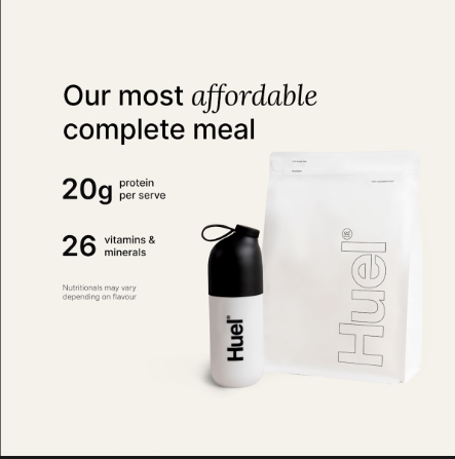
Huel is a UK based complete food nutrition brand founded in 2015 that has re modelled itself from a UK direct-to-consumer (DTC) startup to what is today a global player with a strong digital strategy. With ever increasing revenues it provides an example of how to roll out a successful e-business model. The essay will identify Huel’s E business model; its Competitive-strategy and Business Strategy; the Digital Market Strategy; provide Customer Traffic Data; identify CRM and Social Network Channels before finally addressing Cyber Security.
2. The E-business model
Huel made a strategic transformation from its original Direct-To-Consumer (DTC) model through a digital transformation by implementing an e-Business, a term coined by IBM in 1997.
The relationship they sought to create is referred to as B2C, Business to Consumer model.
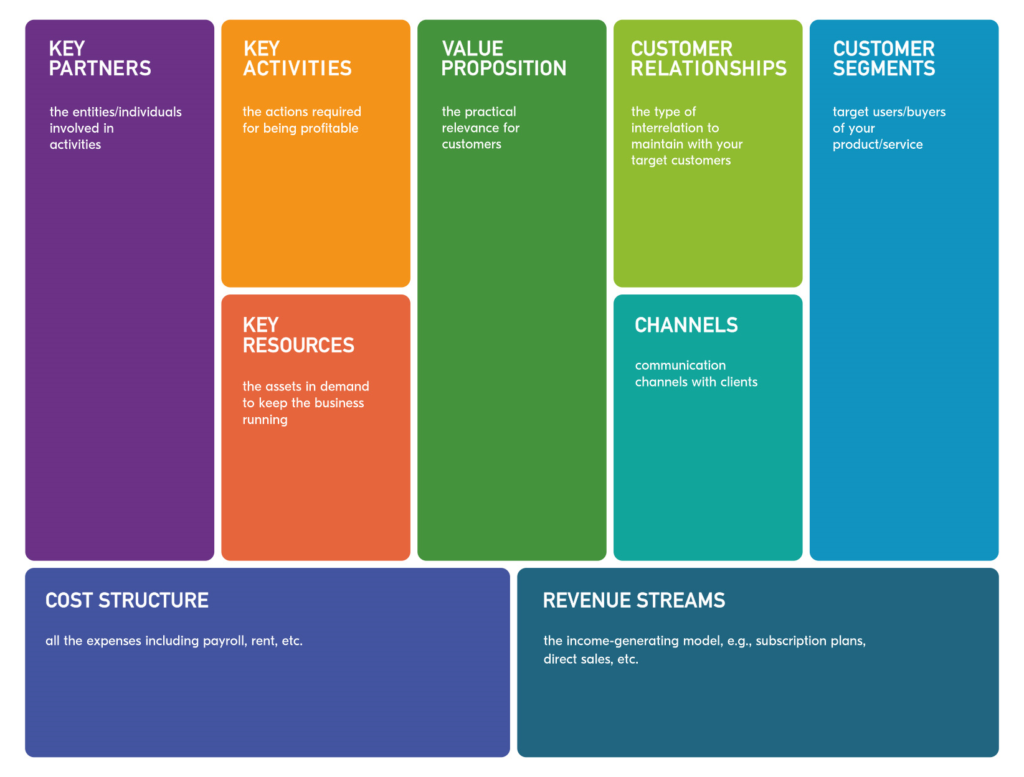
The Business Model Canvas (Osterwalder, 2008) helps facilitate this with its 9 building blocks.
Huel and The Grocer suggest internally the operational dimension of the company has achieved:
– considerably more new clients and leads;
– marketing cost reductions; reduced time needed to service customers; and pivoted to digital sales.
– Supply chain improvements through reduced inventory and the ordering method shortening the time needed.
– Cost reductions in administration; invoicing; less staff; invoice payments etc.
Externally, its customer facing dimension, they have:
– improved their image and brand;
– rapid response to client queries etc.
There are expected problems including website technology failures, hackers; customer relationships such as appearing invasive, unrequested emails and possibly breaking of privacy laws, data protection laws.
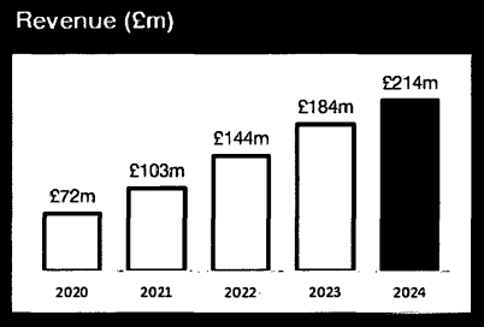
The results of using this model is confirmed by improved revenue streams exceeding £214 million in FY2024 (+16% vs 2023) and profit before tax of £13.8m (+194% vs 2023). (Huel Limited Accounts, 2025).
3. Competitive-strategy and Business Strategy
‘Profits at Huel soared by 40% as the meal replacement brand continued to supercharge growth ahead of its €1Bn takeover from Danone’ (The Grocer 2026).
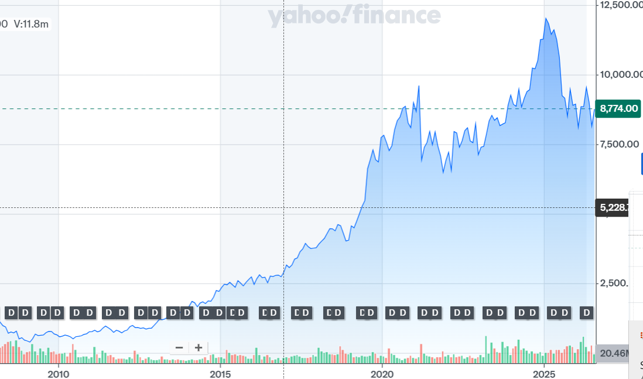
The trading of the companies shares on the LSE give another insight. (Yahoo Finance, 2026).
Chaffey (2009) defines Competitive Strategy as how businesses compete in their markets to realise sustainable advantages while Business Strategy is the future initiatives and investment.
Chaffey is a strong adherent to Porter’s Competitive Forces Model. (Porter, 1979)
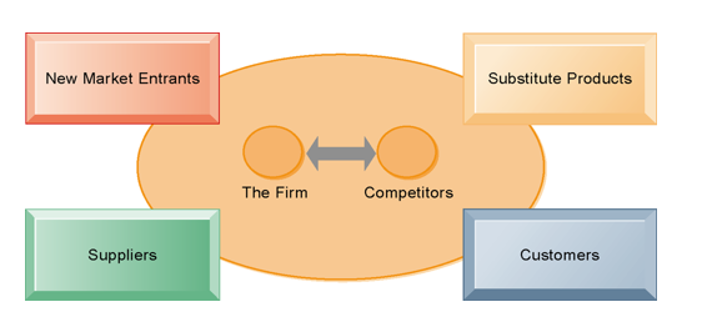
Huel’s describes its competitive strategy or strengths are its differentiation. It tackles competitors and substitutes by what it terms a Product Ecosystem Thinking, providing multiple formats such as powders, RTD, hot meals etc. designed to fit multiple different users.
Yuel also practices a Blue Ocean Strategy, to counter both competitors and new market entrants, which is a business framework developed by professors Chan Kim et al., (2005). Instead of only competing in existing overcrowded markets (Red Oceans) it creates new market spaces.
Whilst maintaining its brand identity, Huel reached another 100+ countries and potential customers, by its link up with Danone, the French multinational food and beverage giant. ‘Combining Huel with Danone’s scale, capabilities and global reach will accelerate growth, innovation and international expansion.’ (Danone, 2026).
Yuel works with external suppliers which keeps costs low, whilst still improving sustainability and ethical standards across the cycle.
4. Digital Market Strategy
Porter’ Five Forces model focused on the external environment whilst Ansoffs Matrix (Ansoff, 1967) provides a strategic framework to address those external pressures through internal growth decisions. (Laudon and Laudon, 2021)
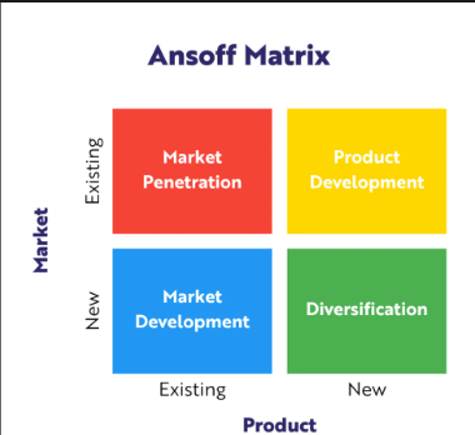
To achieve Market Penetration Huel says it has heavily invested in SEO social media content marketing (recipe ideas, science-backed blogs); and advertising including sophisticated e-mail marketing campaigns that developed a “Hueligan” community, strengthening brand loyalty in their main markets.
Product Development included feedback from customers, and interactive quizzes to help customers find suitable products
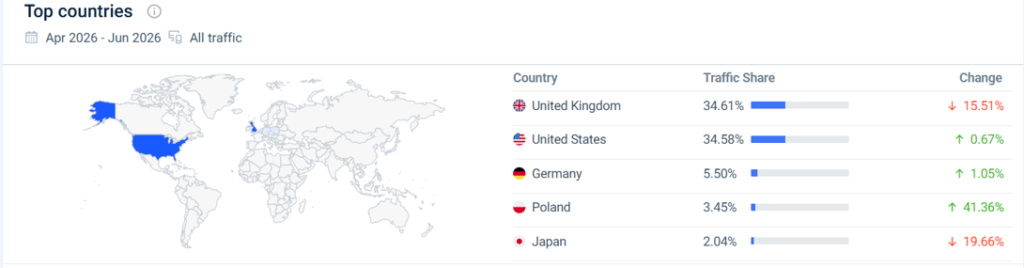
For Market Development Huel through its partnership with Danone, identified new markets rather than competing in saturated ones. However, SimilarWeb figures show that despite a reach of 100+ countries only 11 are contributing more than 1%, highlighting a need to find digital strategies that go beyond their traditional markets
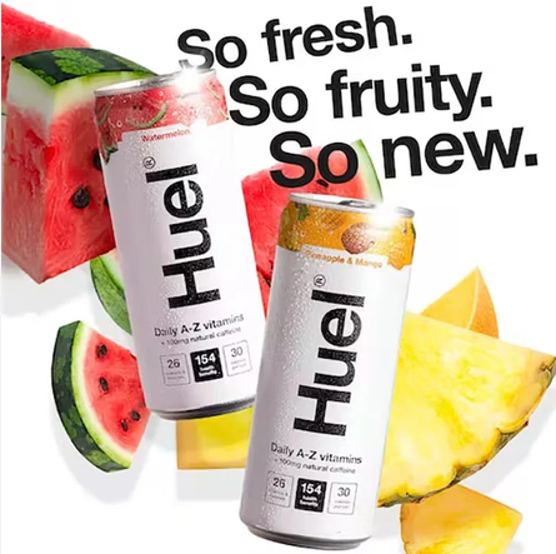
Diversification has led Huel beyond their traditional products to products such as green supplements, protein bars and even apparel and digital marketing will play a key role in promoting these categories.
To reduce competitive pressures Huel could also accelerate localised digital strategies using platforms like TicTok and YouTube Shorts and partnering with local influencers. Moving away from Western-centric style will be vital in developing their new markets.
5. Customer Traffic Data
Making use of the online website analysis tool SimilarWeb (Similarweb, n.d) this essay analyses firstly traffic & engagement which indicates the total visits from April 2026 – June 2026 worldwide was 7.043million. This far exceeds its competitors though it should not encourage complacency.
The geographic reach indicates strong brand loyalty in core markets, with the number of countries above 1% being 11. There are however 75 countries with some form of presence(>0.1%) indicating enormous opportunity for expansion.
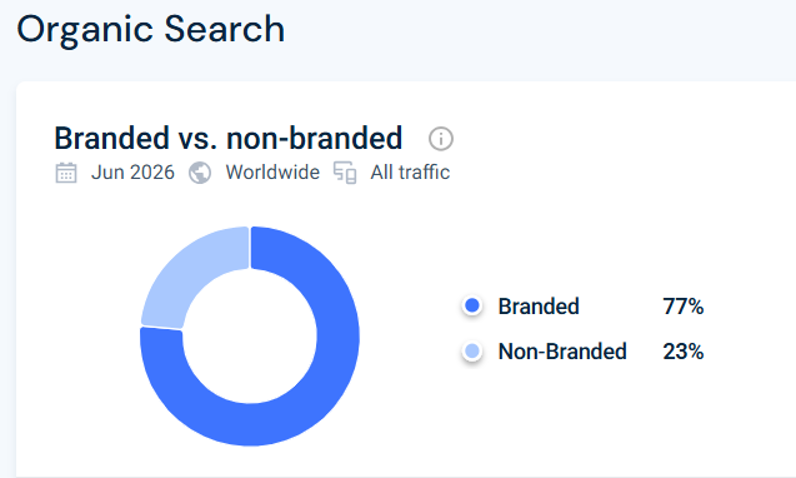
Regarding the source of engagement there is a strong indication of organic/ direct branded searches 77% vs non-branded, indicating a strong brand awareness and that users are close to buying. Paid search was a mere 13.38% suggesting perhaps a lot of word-of-mouth referrals which again is a strong indicator of brand loyalty.
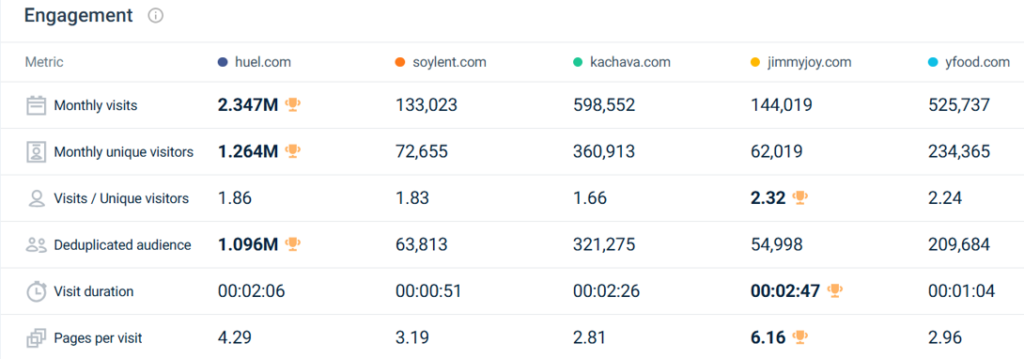
Finally compared against their largest competitors Huel’s 7.043M total visits; Soylent 0.399M; Kachava 1.795M; Jimmjoy 0.432M and Yfood 1.577M are all far smaller. Ranking in the US the same order of companies is #9,078; #71,845; #18,878; #451,123; #420,767 puts Huel considerably ahead.
The table below shows, though not leading in every aspect Huel provides a very superior overall performance supporting minimal reason for critique.
6. e-CRM and Social Network Channels
e-CRM-provides the strategic framework and technology to manage data and relationships while the social networking channels bring about active customer engagement, results in real-time interactions and builds communities. (Chaffey, 2019)
Chaffey and Laudon describe the Customer Relationship Management model which is used by companies to analyse their customers in order to develop a strategy.
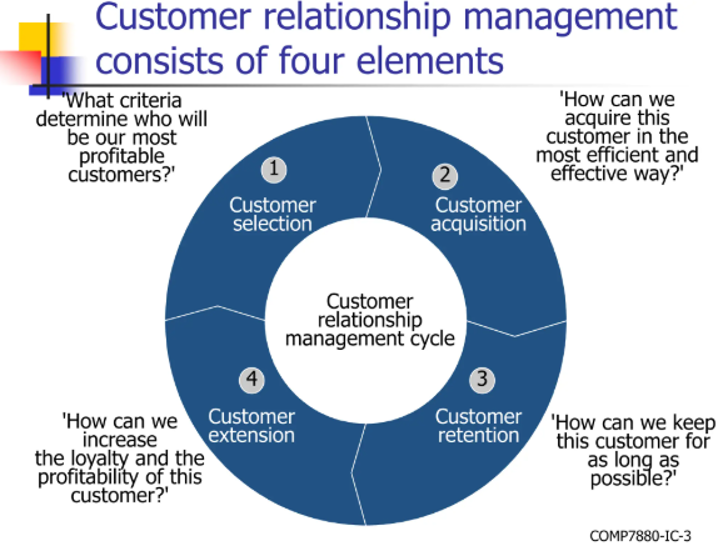
Huel website (Huel, n.d.) reveals it Customer relationship begins with its Direct-to-consumer model selling through its own website giving it control over pricing, customer experience, subscriptions and provides data insights into users. This data is not just promotional; it is educational transparently enabling customers to make informed choices.
Huel is able to attract, select and retain customers specifically by using its e-business model to create data-driven personalisation, community engagement and precision targeting whilst using tools like Fospha to track and optimise the efficacy of their touchpoints. ‘HUEL. 54% increase in new customer conversion on 6 months.’ (Fospha, n.d.).
Customer acquisition involves social media advertising and influencer partnerships to attract new health-conscious consumers. It manages an affiliate and creator partnership where creators promote Huel through their own channels for a commission. It also sets out to convince customers that they can thrive on a diet of only Huel products. (Buckley et al. 2022)
For customer retention Huel not only uses emails but makes use of various more engaging formats (dashboards, short form videos, tools) to enable customers to engage differently, improving engagement and retention. Users are further segmented based on previous behaviours such as high protein, veganism and their needs prioritised.
Finally customer extension is achieved through new product lines (such as Huel Ready-to-Drink or Hot & savoury), New products are frequently identified through Customer feedback loops (e-CRM), turning customers in creators.
7. Cyber Security & ethics
This is not just an IT company problem but relates both to its employees and customers in order to achieve a safe environment.
According to Cybersecurity news (2026), the CIA Triad consists of:
Confidentiality, Integrity, Availability
Considered most essential by Huel in protecting the organisations information systems and invoked in the ISO/IEC 27000 family of information security standards (ISO 2026)
It further makes continual changes to address threats that make systems vulnerable including: accessibility of networks; hardware & software problems; disasters; using networks/computers outside of the firms control, loss and theft of devices, data and information and attacks such as DDOS, a form of cyberattack.
The company is responsible for maintaining high standards of ethics, privacy and Intellectual property protection. It conforms to UK legislation such as e-Commerce act of 1999 (Electronic Commerce Act 2000); and the Regulation of Investigatory Powers Act 2000 (RIP) (Parliament of the United Kingdom, 2000). To practice in foreign markets there are also local regulations and regulations on platforms such as Google.

‘The business value of security acts as a strategic tool that protects value, builds trust, ensures continuity and drives their competitive advantage.’ NIST Cyber Security Framework (CSF) (NIST, n.d.). Huel has put the likes of this model to great use particularly on its website by attending to:
Cybersecurity
– Passport based security to identifying users encouraging a strong unique password;
– Encryption of sensitive data to prevent unauthorised access;
– Monitoring fraud to detect unusual activity;
Ethics compliance
– Strong data protection and privacy practices;
– Transparency through public sustainability reporting
– Ethical supply chains audits and standards.
Recommendations
– introduce multi-factor authentication for stronger account protection.
– Increase visible user education on security practices.
– Expand transparency around data usage to assuage users
8. Conclusion
Huels competitive and business strategy was built by its switch to a ‘direct to consumer’ e-business model that saw the creation of a digital market strategy that achieved enormous growth as verified from customer traffic data. Danone allowed it to expand its geography enormously, demanding though that it broadens its e-CRM and network channels to reach a world-wide multi-cultural audience. Huel built a customer centric e-commerce platform that meets the demands of their customers through open communication. They also developed a trusted cyber secure and ethical platform. Despite its move to new locations, Huel needs to stay competitive as competition soon follows. Presently however, Huel appears to be an excellent example of how it should be done and if they execute as well as they strategised, maintain growth and respond to new threats and new technology, they will maintain their leadership in the nutritionally complete food market.
9. References:
Ansoff, H.I., (1957) Strategies for diversification, Harvard Business Review, 35(5), pp. 113–124.
Buckley, K., Alford, M., Jarvis, H., and Huel Ltd., (2022) A pliot pre and post 4-week intervention evaluating the effect of solely consuming Huel on micronutrient status, dietary intake, and markers of health in a healthy adult population. Fronteirs in Nutrition [online] Available at: https://www.frontiersin.org/journals/nutrition/articles/10.3389/fnut.2022.945622/full [Accessed: July 2026]
Chaffey, D., Arturi, T., Hemphill, T., and Edmundson-Bird, D., (2019) Digital business and E-Commerce management: Strategy, implementation and practice. 7th ed. UK : Pearsons Education
Cybersecurity News, 2026. What is the CIA Triad (Confidentiality, Integrity, Availability)? Available at: https://cybersecuritynews.com/cia-triad-confidentiality-integrity-availability/ (Accessed 25 July 2026)
Danone. 2023. Danone to acquire Huel, extending its portfolio in Functional Nutrition Press release 23 March Available at https://www.danone.com/newsroom/press-releases/acquisition-huel.html Accessed 25 July 2026
Electronic Commerce (EC Directive) Regulations 2002, c.201 Available at: https://www.legislation.gov.uk/uksi/2002/201/contents (Accessed: 25 July 2026)
Fospha. Available at: https://www.fospha.com/case-studies/huel-case-study (Accessed 25 July 2026)
Huel. (n.d.) Huel:Main Available at: https://huel.com/ (Accessed 25 July 2026)
Huel Press Team, (2026). Personal communication [email]. Available at: press@huel.com (Accessed 25 July 2026)
Huel Limited (2025). Accounts for the period ended 31 July 2025. Available athttps://find-and-update.company-information.service.gov.uk/company/07907551/filing-history. (Accessed: 25 July 2026).
International Organisation for Standardisation [ISO] (2026). Information security, cybersecurity and privacy protection – Information security management systems – Overview (ISO/IEC 27000:2026 [Online]. Available at https://www.iso.org/standard/27000 (Accessed 25 July 2026)
Kim, W.C., and Mauborgne, R. (2005) Blue Ocean Strategy: How to create uncontested market space and make the competition irrelevant. Boston: Harvard Business School Press.
Laudon, K C., and Laudon J P. (2021) Management information systems: managing the digital firm. 17th ed. London: Pearsons education.
National Institute of Standards and Technology (NIST) (n.d.) Cybersecurity Framework. Available at: https://www.nist.gov/cyberframework USA (Accessed: 21 July 2026).
Osterwader, A. (2008) The Business Model Canvas: A Handbook fro Visionaries, Game Changers, and Challengers. Geneva: Strategyszer AG.
Parliament of the United Kingdom (2000). Regulation of Investigatory Powers Act 2000 (c. 23) Available at: https://www.legislation.gov.uk/ukpga/2000/23/contents Accessed July 2026
Porter, M.E. (1979) ‘How competitive forces shape strategy’, Harvard Business Review, 57(2), pp. 137–145.
SimilarWeb. (n.d.). Huel website analytics and competitor comparison. Available at https://similarweb.com/ (Accessed: 25 July 2026)
The Grocer (2026) Huel profits race. Available at lhttps://www.thegrocer.co.uk/news/huel-profits-race-40-higher-ahead-of-danone-1bn-takeover/717473.article [Accessed: 25 July 2026)
Yahoo Finance (“026) Huel LSE Share Price Chart [Online]. Yahoo Finance. Available at https://finance.yahoo.com/quote/HUEL.L [Accessed 25 July 2026]